
Citizenship: 8th Grade 11 Sections46 Lessons365 Days
1.1 The concept of virtue ethics
The Concept of Virtue Ethics
CITIZENSHIP Grade 8
Lesson Competencies
At the end of the lesson you will be able to:
Define the concept of virtue ethics in the context of citizenship.
Distinguish between virtues (good traits) and vices (bad traits).
Apply the concept of the Golden Mean to daily scenarios.
Identify Ethiopian cultural practices that promote strong ethical character.
Key Terms
Virtue
A positive, highly valued character trait or moral excellence, such as honesty or courage.
Vice
A negative character trait or immoral behavior, such as greed or cowardice.
Virtue Ethics
A theory focusing on the development of good character rather than just following a set of strict rules.
Golden Mean
The desirable middle path between two extremes (one of excess and one of deficiency).
Video Lesson: Character Matters
Watch this short video explaining why character builds a strong community.
Core Lesson: What is Virtue Ethics?
Introduction
Dear learners,
Imagine you are walking home from school in Addis Ababa. You see a wallet drop from the pocket of the person walking in front of you. They don’t notice. What do you do?
Some theories of ethics tell you to look at the rules (“Do not steal”). But Virtue Ethics asks a different question: “What kind of person should I be?”
Building Good Character
Virtue ethics is an approach that emphasizes an individual’s character as the key element of ethical thinking. Instead of memorizing rules, we practice being a good person. A person with good character possesses virtues.
Virtues (Good Traits)
- Honesty: Telling the truth.
- Compassion: Caring for others.
- Courage: Facing fear for a good cause.
- Integrity: Doing the right thing even when no one is looking.
Vices (Bad Traits)
- Dishonesty: Lying or cheating.
- Selfishness: Only thinking of oneself.
- Cowardice: Running away from what is right.
- Greed: Wanting more than one needs.
The Golden Mean
The ancient philosopher Aristotle taught that a virtue is usually a balance between two extremes (vices). This balance is called the Golden Mean.
Example of the Golden Mean:
Virtue in Ethiopian Culture
In Ethiopian society, virtue ethics is deeply rooted in community life. We learn character not just from books, but from observing elders and participating in community activities.
- Respect for Elders: Giving up a seat on a public bus or bowing slightly when greeting older people shows the virtue of respect.
- Idir & Ekub: These local associations show the virtues of generosity, solidarity, and mutual support during times of grief or financial need.
- Debo/Jigi: Coming together to help a neighbor harvest their farm highlights the virtue of cooperation.
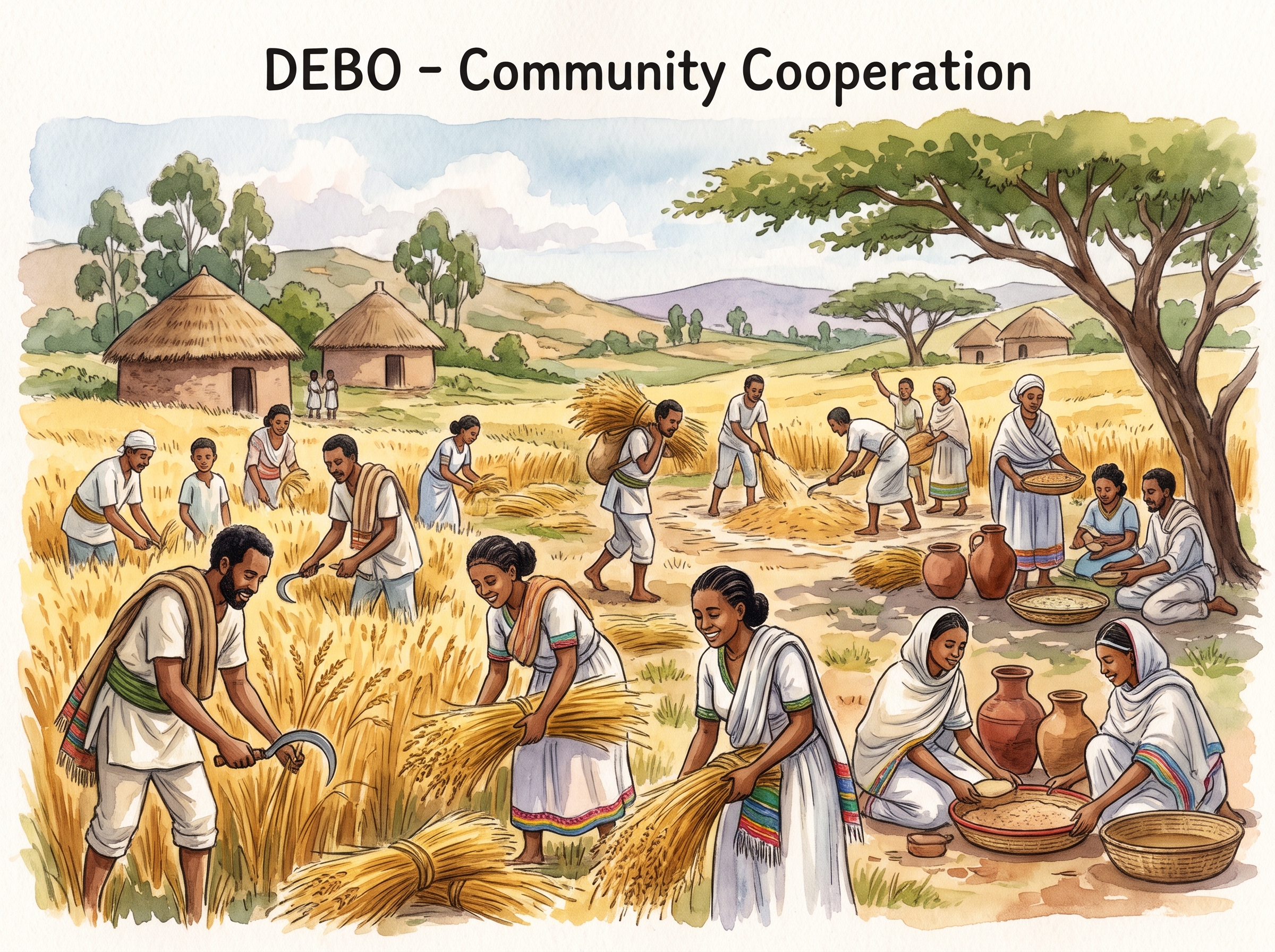
Game: Reveal the Community Image!
Click a tile and answer the question correctly to break it. Break all tiles to reveal the hidden image beneath!
Question goes here
Activity 1: Multiple Choice
Test your understanding. Complete one question at a time.
Activity 2: Match the Virtue
Tap-to-Select, Tap-to-Place: Tap a scenario, then tap the empty box next to the matching virtue.
Scenarios
Virtues
Activity 3: Mixed Challenge
True/False and Scenario questions. Navigate using Next/Previous.
Lesson Summary
Virtue Ethics focuses on building good character rather than just following strict rules.
A virtue is a positive character trait (like honesty), while a vice is a negative one (like greed).
The Golden Mean teaches us that the best path is often a balance between two extremes.
Ethiopian culture promotes virtues through practices like Idir, Debo, and showing deep respect for elders.
Final Assessment
Check your final understanding of Virtue Ethics.
Competency Checklist
Self-Assessment: Check the boxes for the skills you have mastered today.