
Science: Grade 7 11 Sections54 Lessons365 Days
1.1 Definition of Science and its Branches
Definition of Science and its Branches
General Science Grade 7
Lesson Competencies
At the end of the lesson you will be able to:
Define science accurately.
List the major branches of science.
Differentiate between biology, physics, and chemistry.
Appreciate how science relates to everyday life in Ethiopia.
Key Terms
Science
A systematized body of knowledge based on observation, experimentation, and facts.
Biology
The study of living organisms, their structure, growth, and origin.
Physics
The study of matter, energy, motion, and forces in the universe.
Chemistry
The study of the composition, properties, and reactions of substances.
Video Lesson
Watch this short introduction to the natural sciences.
Core Lesson
Introduction
Dear learners,
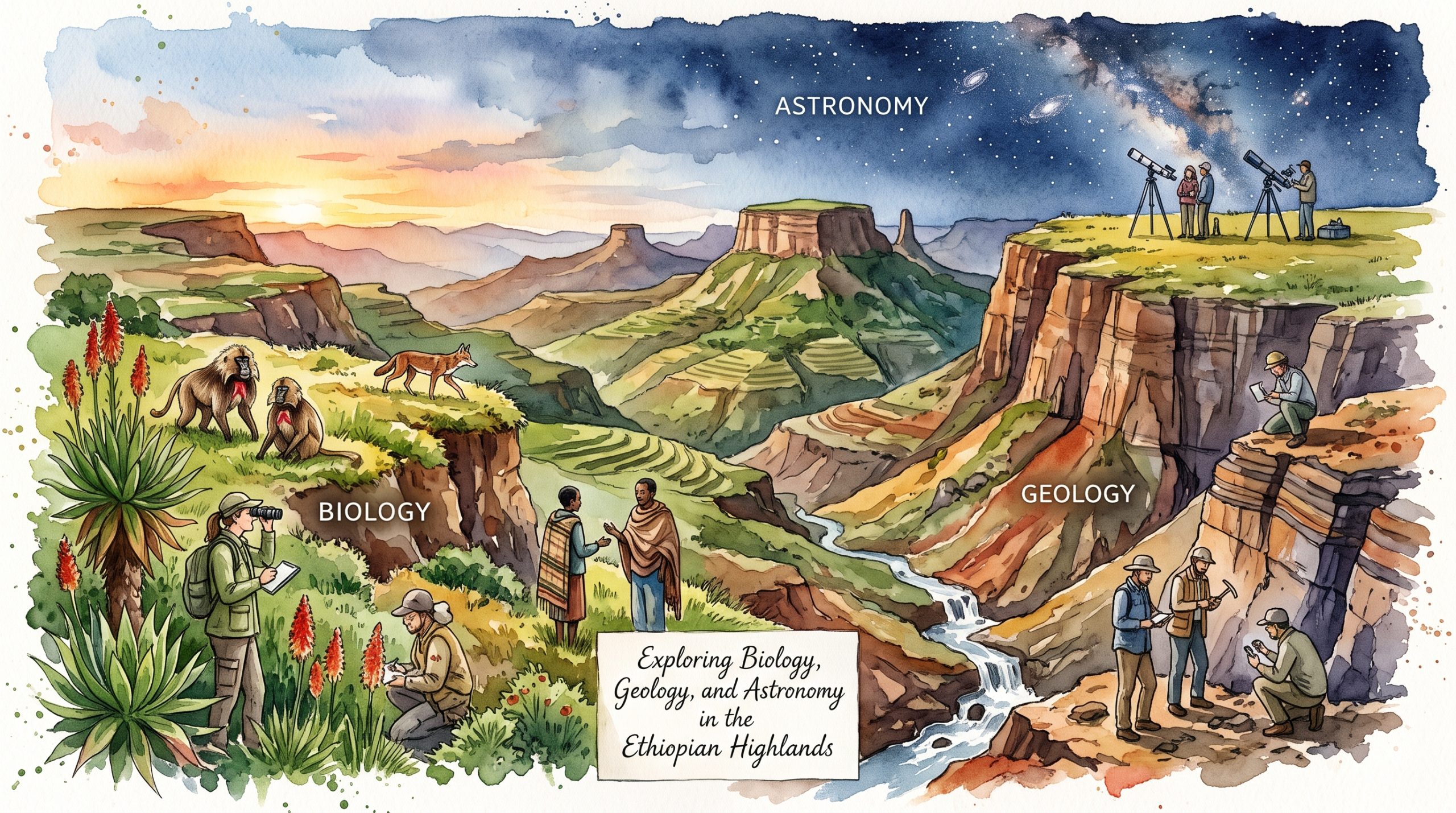
Have you ever wondered why the Great Rift Valley has hot springs, how the beautiful Waliya Ibex survives in the high Simien Mountains, or why Injera batter bubbles when it ferments? These are all questions that science can answer!
Science comes from the Latin word ‘Scientia’, which means knowledge. It is a systematic way of learning about the world through observation, asking questions, and doing experiments.
The Natural Sciences
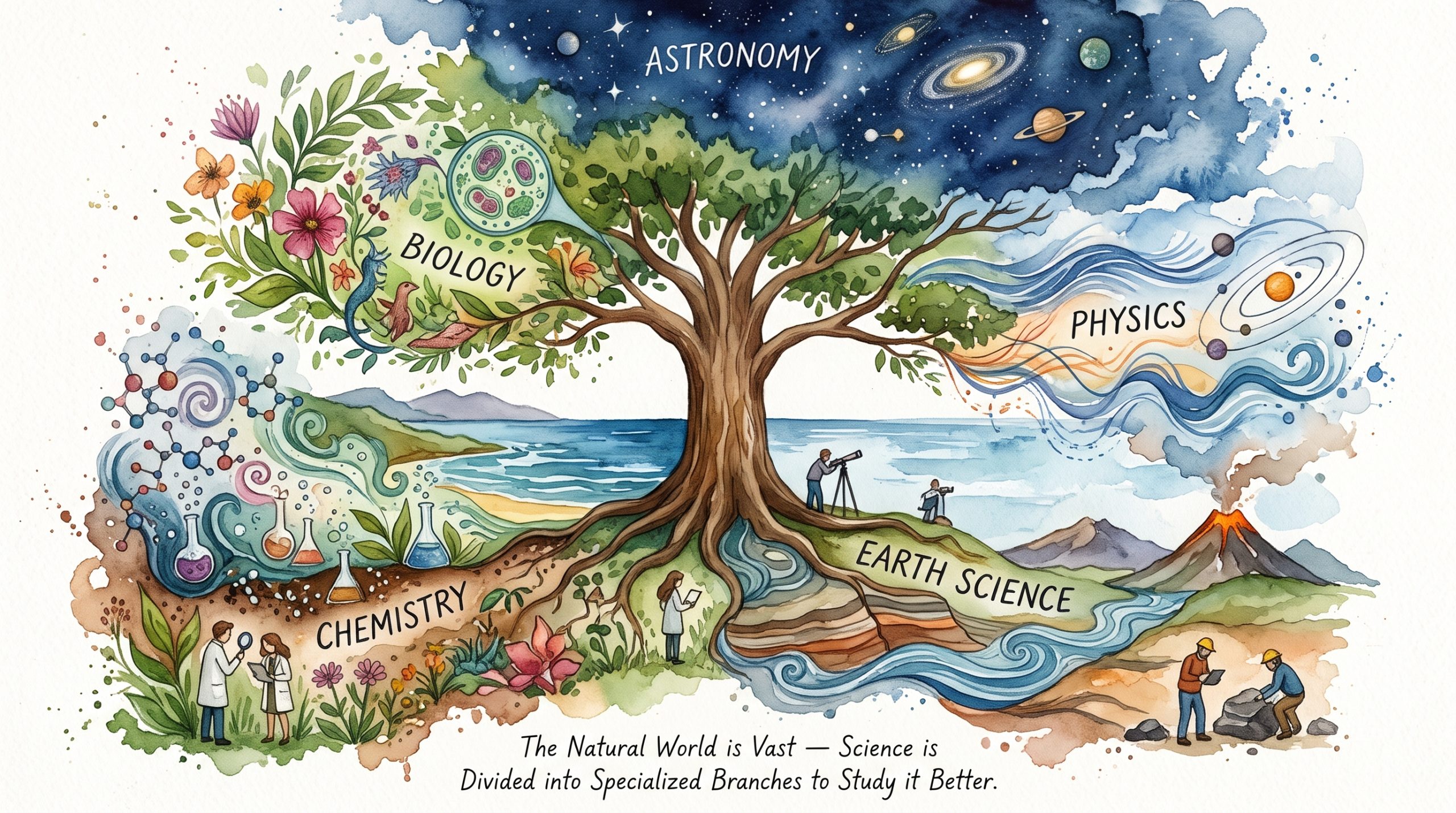
The natural world is huge, so we divide science into specialized branches to study it better.
1. Biology
Biology is the study of life. If you are studying the unique plants of the Bale Mountains, the coffee plants in Kaffa, or how your own body digests food, you are learning biology.
2. Physics
Physics explores matter and energy. When you calculate how fast athlete Kenenisa Bekele runs, or understand how gravity pulls the water down the Blue Nile Falls (Tis Abay), you are using physics.
3. Chemistry
Chemistry looks at what things are made of and how they change. Roasting coffee beans changes their chemical makeup, creating that delicious smell! That is chemistry.
4. Earth Science (Geology)
This branch focuses on our planet. Geologists study the rocks of the Danakil Depression and the formation of the Ethiopian highlands.
5. Astronomy
Astronomy is the study of space. Ancient Ethiopians used stars to create accurate calendars, which is an early application of astronomy!
Real World Examples
Teff Farming
Understanding soil and plant growth is Biology and Earth Science.
Athletics
Motion, friction, and speed of runners relates to Physics.
Baking Injera
Fermentation of the dough is a classic example of Chemistry.
Virtual Lab (Chemistry Focus)
Explore the basic building blocks of matter (Atoms) in this interactive simulation.
Game: Ethiopian Science Explorer
Tap a scenario from the top bank, then tap the correct branch of science below to match them! Works perfectly on mobile.
Scenarios to Sort:
Biology
Physics
Chemistry
Earth Science
Astronomy
Activity 1: Multiple Choice
Activity 2: True or False
Activity 3: Mixed Challenge
Lesson Summary
Science is a body of knowledge gathered through observation and experiments.
The main branches are:
- Biology: The study of living things (plants, animals, humans).
- Physics: The study of matter, energy, and forces in nature.
- Chemistry: The study of substances and their reactions.
- Earth Science: The study of the Earth’s structure.
- Astronomy: The study of the universe and space.
Final Assessment
Competency Checklist
Check the boxes below if you feel you have achieved the lesson goals: