
History: 9th Grade 13 Sections70 Lessons365 Days
1.1 Meaning of Prehistory and History
Meaning of Prehistory and History
History 9th Grade
Lesson Competencies
At the end of the lesson you will be able to:
Define the terms History and Prehistory.
Explain the key differences between the study of History and Prehistory.
Understand the importance of written and physical evidence.
Distinguish between a historical fact and an opinion.
Key Terms
History
The study of the human past after the invention of writing, based on written records.
Prehistory
The study of the human past before the invention of writing, based on physical evidence.
Artifact
An object made by a human being, typically an item of cultural or historical interest, like a tool or pottery.
Fossil
The remains or impression of a prehistoric organism preserved in petrified form or as a mold or cast in rock.
Video Lesson
Core Lesson: Uncovering the Past
Dear learners,
imagine you are a detective trying to solve a very, very old mystery: the story of humankind. What clues would you look for? Would you rather find an ancient diary or an ancient tool? The answer depends on which part of the mystery you are trying to solve!
Today, we will learn about the two main parts of this great human story: History and Prehistory.
What is Prehistory?
Prehistory is the story of humanity before the invention of writing, which happened about 5,500 years ago. Since there are no books, letters, or diaries from this time, how do we know anything about it? We rely on physical clues left behind!
Scientists like archaeologists and anthropologists act like detectives. They study:
- Fossils: The preserved remains of early humans, like our famous ancestor “Lucy” (Dinknesh), found here in Ethiopia.
- Artifacts: Objects made by humans, such as stone tools, pottery, and cave paintings.
Because there are no written records, our understanding of prehistory is more speculative and based on interpreting these physical clues.
What is History?
The word History comes from the Greek word Istoria, meaning “inquiry.” History is the study of the human past from the time writing was invented. This invention was a game-changer! Suddenly, people could record their laws, their rulers, their beliefs, and their stories.
Historians are scholars who study this period. Their main source of information is written records, such as:
- Ancient Egyptian hieroglyphics.
- Clay tablets with cuneiform from Mesopotamia.
- Books, letters, and government documents from ancient Rome or China.
Facts vs. Interpretation
History is built on facts—verifiable pieces of evidence. For example, it is a fact that World War II ended in 1945. But history is more than just a list of facts. Historians also interpret these facts. They explain what happened, why it happened, and what its consequences were. This is why two historians might look at the same event and have different opinions about its importance, but they must both base their arguments on the available factual evidence.
Visualizing the Past
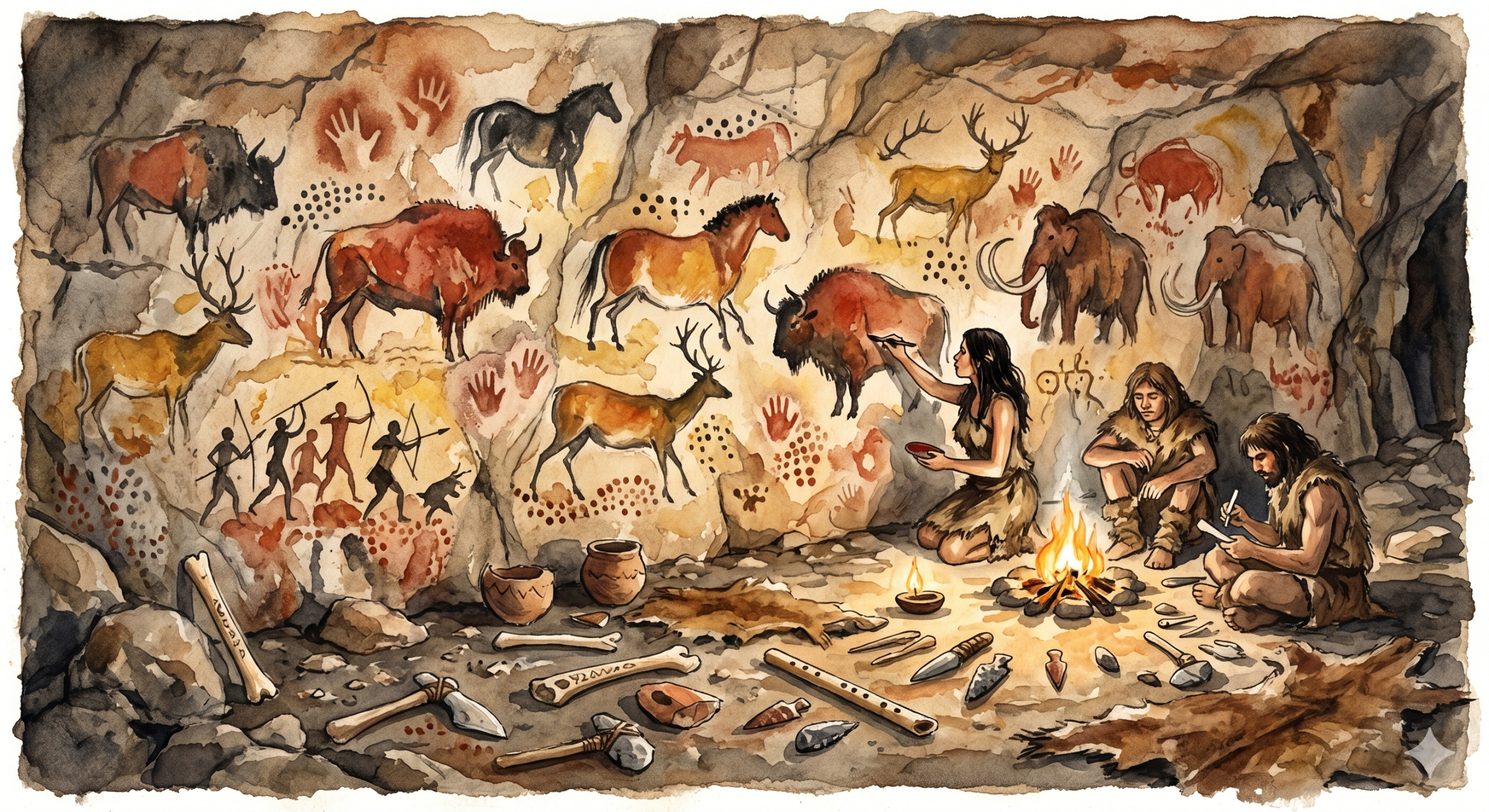
Prehistory
Cave paintings and artifacts represent human life and culture before the invention of written language.
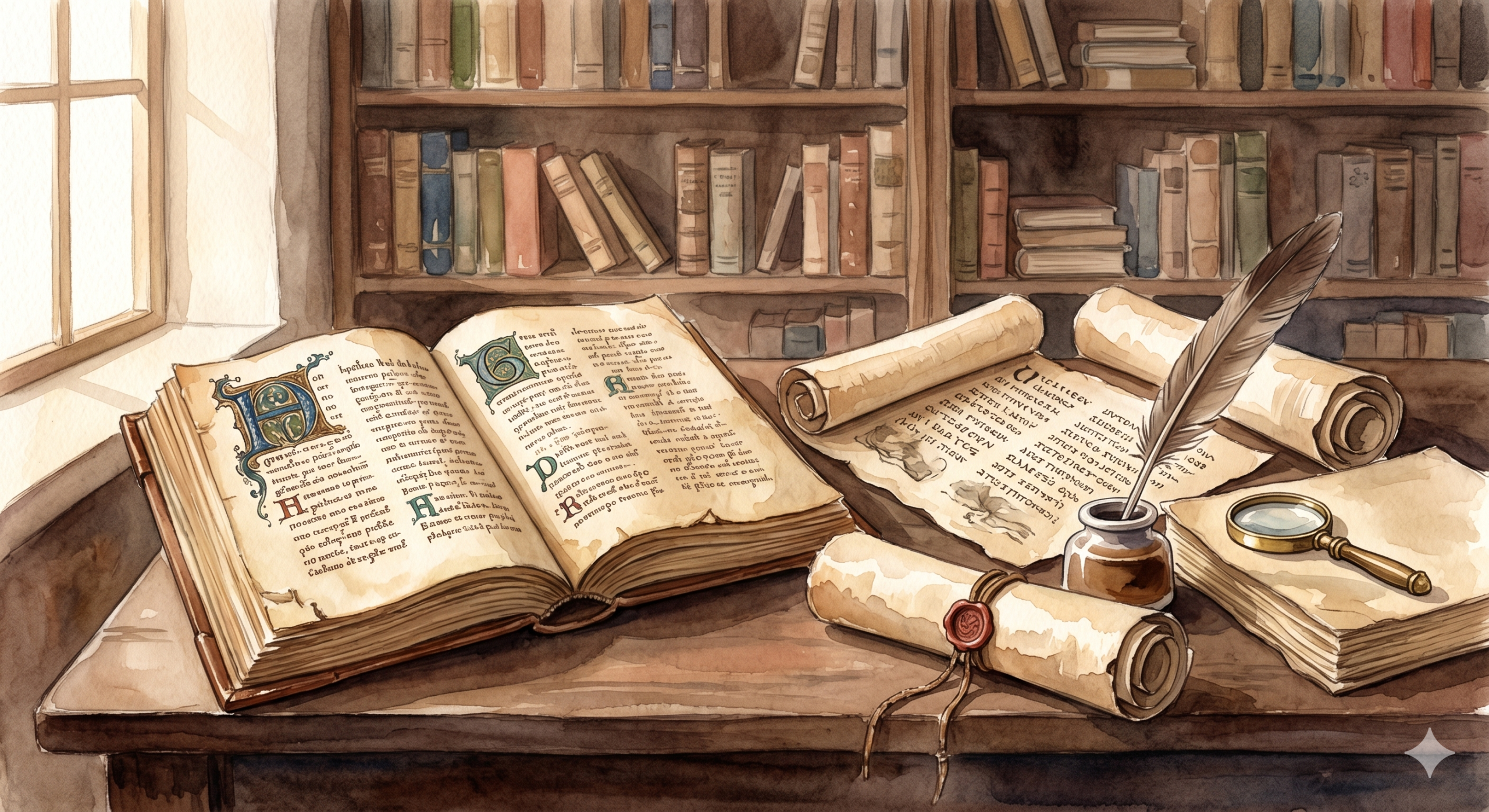
History
Ancient manuscripts, scrolls, and texts mark the beginning of recorded history and historical inquiry.
Prehistory vs. History
| Feature | Prehistory | History |
|---|---|---|
| Time Period | Before the invention of writing (~5,500 years ago) | After the invention of writing |
| Primary Evidence | Physical objects (fossils, artifacts, tools) | Written records (documents, books, inscriptions) |
| Studied By | Archaeologists, Anthropologists | Historians |
| Nature of Study | More speculative, based on interpretation of objects | Based on interpretation of documented events |
Activity 1: Check Your Knowledge
Activity 2: True or False?
Activity 3: Sort the Evidence
Drag each piece of evidence to the correct historical period it would be used to study.
Evidence
Periods
Prehistory
History
Lesson Summary
The human past is divided into two major periods: Prehistory (before writing) and History (after writing).
Prehistory is studied by archaeologists who analyze physical evidence like fossils and artifacts.
History is studied by historians who rely on written records to understand past events.
History is based on verifiable facts, but historians also interpret these facts to explain what happened and why.
Final Assessment
Competency Checklist
Check off the skills you’ve mastered in this lesson.