
English: 8th grade 14 Sections44 Lessons365 Days
1.2. Reading and Vocabulary lesson
Economic Activities in Rural Ethiopia
English Eighth Grade
Lesson Competencies
At the end of the lesson you will be able to:
Define key vocabulary related to rural economies, such as income, tourism, and non-farm activities.
Identify the main idea and supporting details in a text about economic activities in rural Ethiopia.
Infer the meaning of unfamiliar words using context clues from the reading passages.
Differentiate between farming and non-farm economic activities.
Summarize the ways people in rural areas can earn an income.
Key Terms
Economy
The system of how money, goods, and services are made and used in a country or area.
Income
Money that a person or a business receives, usually in exchange for working or selling goods.
Farming
The activity of growing crops like teff and coffee, or raising animals like cattle and goats for food and other products.
Non-farm Activities
Jobs and businesses in rural areas that are not related to farming, such as weaving, pottery, or being a tour guide.
Tourism
The business of providing services like hotels, guides, and transportation for people who are visiting a place for vacation.
Mining
The process of getting valuable minerals, like gold or opals, from the ground.
Pre-Reading Activities
Dear learners,
Think about a village you know or have heard about in Ethiopia. What kind of work do people do there? Most people might say “farming,” and that’s true! But people in rural areas do many other things to earn money and support their families. These different jobs make up the village’s economy. Today, we will learn about these exciting activities.
Brainstorming Scenario
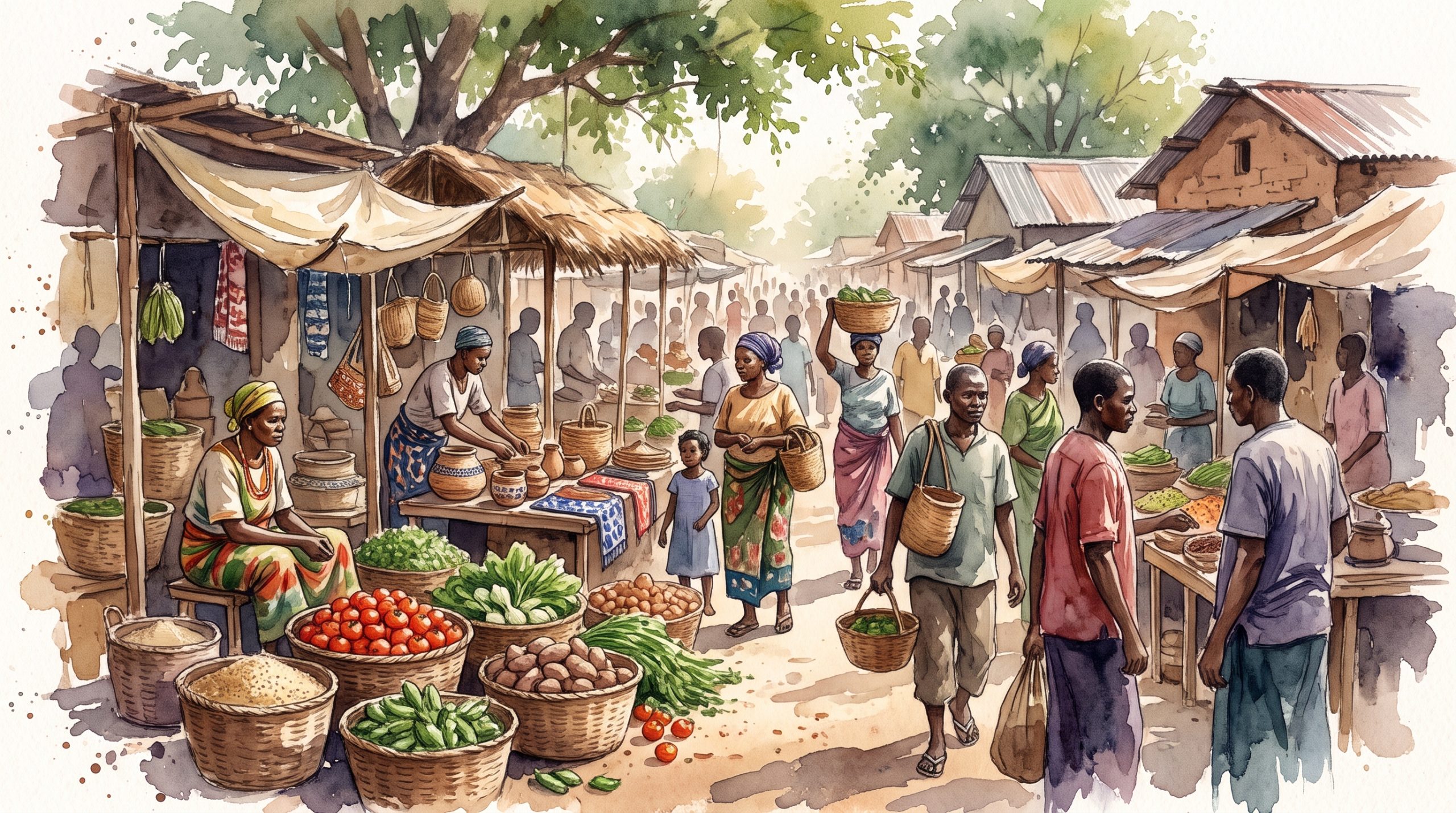
Imagine a rural market like this one near Hawassa. You can see people selling coffee, grains, vegetables, and beautiful handmade crafts. A busy market shows a strong local economy where people have many ways to earn an income.
Before You Read
As you read the following passage, think about these questions:
- What are the two main ways Abebe’s family earns an income?
- What is an example of a non-farm activity in the village?
- Why might tourism become important for the village’s economy?
Reading Comprehension
Read the passage about a rural village and answer the questions that follow.
Passage: Life in Ambo Village
Ambo is a small village nestled in the green highlands of Ethiopia. Here, a boy named Abebe lives with his family. The main economic activity in Ambo is farming. Abebe’s family owns a small plot of land where they grow teff to make injera and sell at the market. This provides a steady income for most of the year. However, his parents are wise and know it’s important to diversify. During the dry season, his mother, Chaltu, weaves beautiful scarves with traditional patterns. This is a vital non-farm activity that brings in extra money.
Recently, life in Ambo has started to change. The government built a new road connecting the village to the main highway. Now, more visitors are coming to see the nearby ancient rock-hewn church. This has created a new opportunity: tourism. Abebe’s uncle has started a small guide service, and some families are thinking of opening guest rooms. This could boost the entire village’s economy, creating new jobs and bringing more wealth to the community. The village elders believe that by combining their traditional farming with new opportunities like tourism and crafts, Ambo can have a very bright future.
Vocabulary Practice
Use your knowledge of the key terms and the reading passage to answer the questions.
Lesson Summary
The economy of a rural area is made up of all the ways people make and spend money.
Farming is the most common way for people in rural Ethiopia to earn an income.
Non-farm activities, like making crafts or selling goods, are also very important for earning extra money.
New opportunities like tourism and small-scale mining can help a rural economy grow and create new jobs.
Having a mix of different economic activities makes a community stronger and more successful.
Final Assessment
Read the new passage and answer the questions.
Passage: The Dorze Weaving Cooperative
In the hills near Arba Minch, the Dorze people are famous for their unique weaving skills. For many years, each family sold their own textiles, but their individual income was small. Then, a wise woman named Aster proposed an idea: a cooperative. All the weavers joined together to create the “Dorze Weavers’ Cooperative.” Now, they buy materials in bulk at a lower cost and sell their finished products together under one brand.
This cooperative is a fantastic example of a successful non-farm activity. It has transformed the local economy. The weavers earn more money, which helps them improve their homes and send their children to school. The cooperative has also attracted more tourism to the area. Visitors come from all over the world not just to buy the beautiful textiles but also to see the famous Dorze houses and learn about their culture. This shows how developing a traditional skill can create many economic benefits for an entire community.
Competency Checklist
Check off each competency as you master it: