
English: 8th grade 14 Sections44 Lessons365 Days
1.1. Listening and Speaking Lesson
Economic Activities in Rural Areas
English Eighth Grade
Lesson Competencies
At the end of the lesson you will be able to:
Listen for main ideas and specific information about rural economic activities.
Identify different economic activities described by various speakers from Ethiopia.
Formulate ‘wh-‘ questions to ask about local economic activities.
Interview a partner about the economic activities in their area.
Use vocabulary related to rural economies accurately in speaking.
Key Terms
Agriculture
Growing crops like teff, coffee, and maize. This is the main activity in places like the Oromia and Amhara regions.
Livestock Rearing
Raising animals such as cattle, sheep, and goats, which is common in the Somali and Afar regions.
Handicrafts
Making traditional items by hand, like pottery in the Wolayta zone or weaving shemma cloth in Dorze.
Trade
Buying and selling goods at local markets, for example, the large Saturday market in a town like Bati.
Getting Ready to Listen
Dear learners,
Ethiopia is a big country with many different environments. Because of this, people in rural areas do many different kinds of work to earn a living. The job a person does often depends on the land and climate where they live.
Think About Your Area
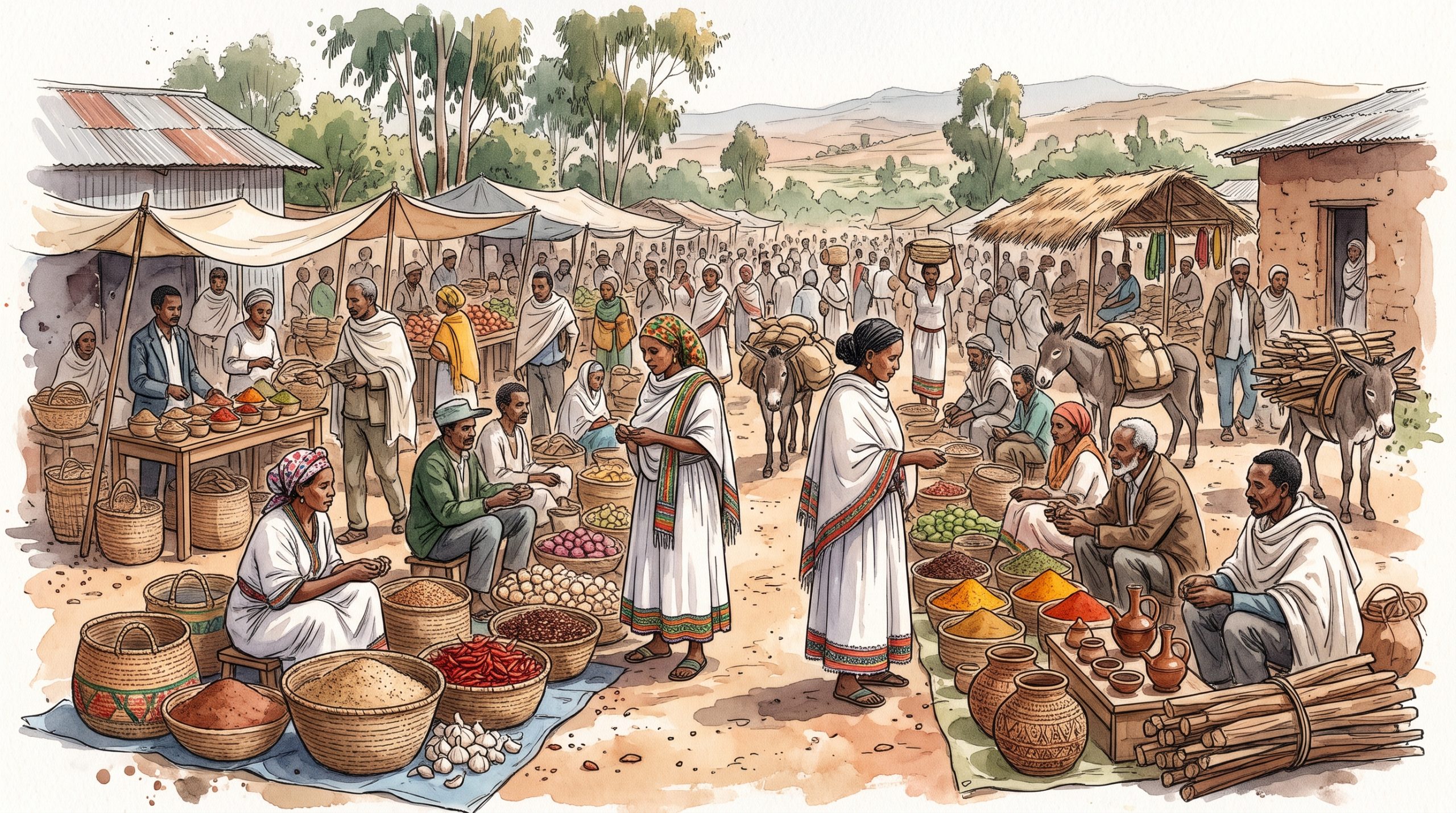
Before you listen, think about these questions: What are the main jobs people do in the countryside near your home? What products come from the rural areas you know?
While You Listen
You are going to listen to three speakers from different parts of Ethiopia. As you listen, try to find the answers to these questions:
- What is the main economic activity for Chaltu in Oromia?
- What two activities are part of ‘mixed farming’ for Berhanu in Amhara?
- Why is livestock rearing the main activity for Halima in the Somali region?
Listening Practice
Listen to the passage about economic activities and answer the questions below.
Speaking Practice: Interview Your Partner
Work with a partner. Take turns being the ‘Interviewer’ and the ‘Student’. The interviewer will ask questions about the economic activities in the student’s local area. Use the ‘wh-‘ question words (What, Where, Who, When, Why, How). Record your answers.
Lesson Summary
In this lesson, we learned that different rural areas in Ethiopia have different main economic activities based on their climate and resources.
We heard about coffee farming in Oromia, mixed farming (growing teff and raising cattle) in Amhara, and livestock rearing (camels and goats) in the Somali region.
Other important activities include making handicrafts and participating in local trade at markets.
By using ‘wh-‘ questions, we can interview people and learn more about the economic life in any area.
Final Assessment
Listen to the new passage and answer the questions to check your understanding.
Competency Checklist
Check off each competency as you master it to track your final progress: